Status :
Unbuilt
Completion Date :
2026
Area :
2000 Sqm
Landscape Architect :
Client :
Typology :
Hospitality

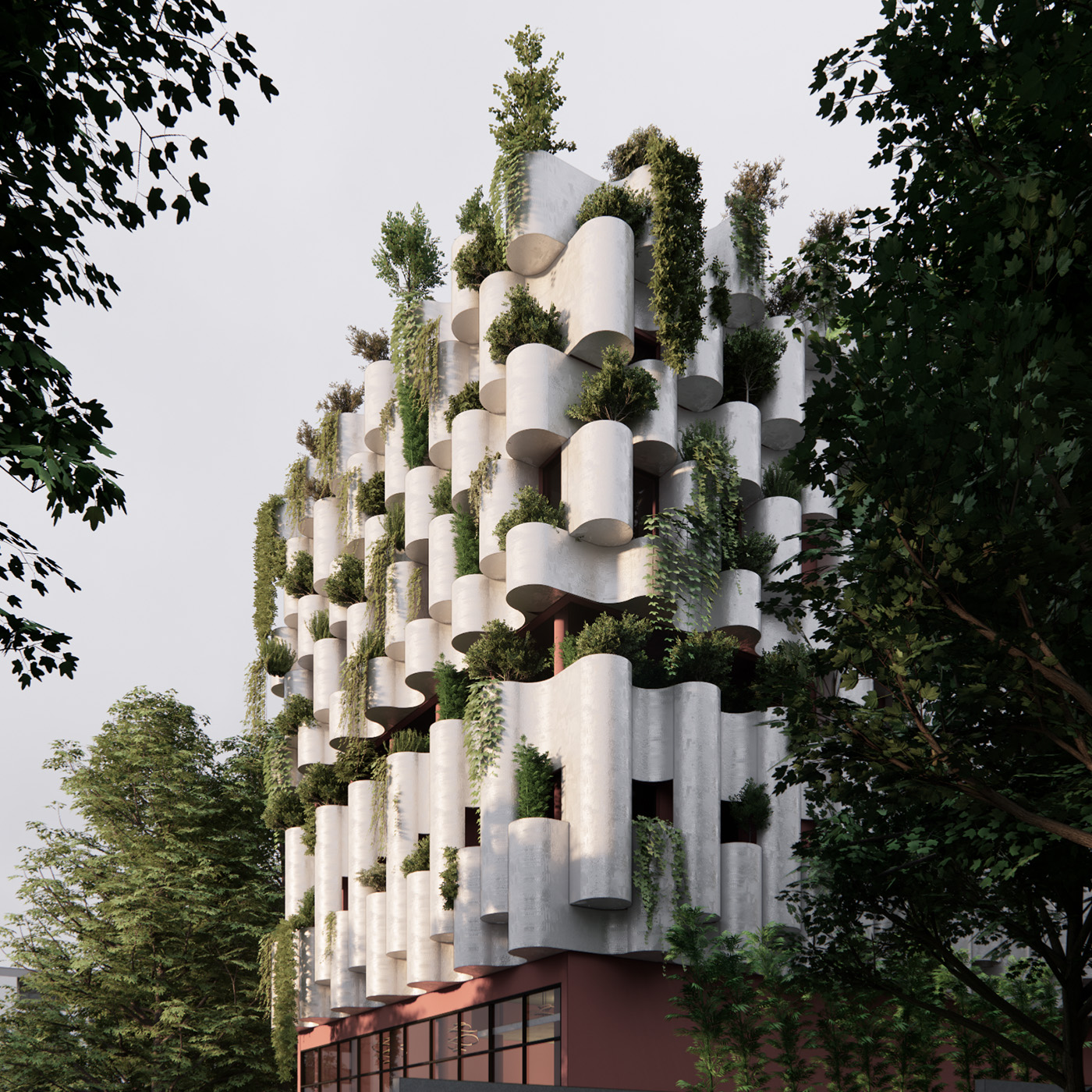
The architectural language is defined by a rhythmic facade of cylindrical concrete forms that create depth, shade, and identity. These modular elements function as both spatial buffers and planted terraces, allowing vegetation to become an integral part of the building rather than an applied feature. The result is a living facade that transforms over time, softening the mass, improving environmental performance, and creating a distinct visual presence within the city.
Each guest room is conceived as a private micro sanctuary, where efficient planning meets sensory comfort. Natural light, framed views, and planted thresholds contribute to a calm and restorative atmosphere despite the compact footprint. At ground level, transparent communal spaces invite connection between guests and the surrounding neighborhood, establishing the hotel as both a destination and a social anchor.
More than a hospitality project, this proposal is an exploration of how architecture can create meaningful urban escape, where sustainability, intimacy, and identity coexist in a compact vertical form. It challenges the conventional hotel typology by offering a quieter, greener, and more human-centered approach to temporary living.
The architectural language is defined by a rhythmic facade of cylindrical concrete forms that create depth, shade, and identity. These modular elements function as both spatial buffers and planted terraces, allowing vegetation to become an integral part of the building rather than an applied feature. The result is a living facade that transforms over time, softening the mass, improving environmental performance, and creating a distinct visual presence within the city.
Each guest room is conceived as a private micro sanctuary, where efficient planning meets sensory comfort. Natural light, framed views, and planted thresholds contribute to a calm and restorative atmosphere despite the compact footprint. At ground level, transparent communal spaces invite connection between guests and the surrounding neighborhood, establishing the hotel as both a destination and a social anchor.
More than a hospitality project, this proposal is an exploration of how architecture can create meaningful urban escape, where sustainability, intimacy, and identity coexist in a compact vertical form. It challenges the conventional hotel typology by offering a quieter, greener, and more human-centered approach to temporary living.
Check out More Projects


